. דרך התפריט ניתן לעצור אנימציות, להגדיל קונטרסט, לשנות גודל פונט ולהדגיש קישורים.
Xfloat announces the launch of its new operational monitoring and control platform: XFPD 2.0. The system represents a change in solar plant management, replacing passive monitoring with active, value-driven management.
In the renewable energy sector, the challenge is not only to generate electricity, but to do so at the lowest possible cost over time (LCOE).
XFPD 2.0 was designed with the understanding that its most critical role is safeguarding investor returns (ROI). It achieves this by maximizing the production capability of existing assets while minimizing the need for costly future investments to repair accumulated damage.
LCOE-Driven Priority Engine
At the core of the system is a smart prioritization engine (“Priority Engine”) that analyzes every alert based on multiple parameters—not solely on technical fault severity. The algorithm evaluates, in real time, the potential economic loss and the impact on long-term system survivability. This enables the system to prioritize and escalate events that are critical for maintaining yield, while filtering out “background noise” that would consume valuable human resources without economic justification.
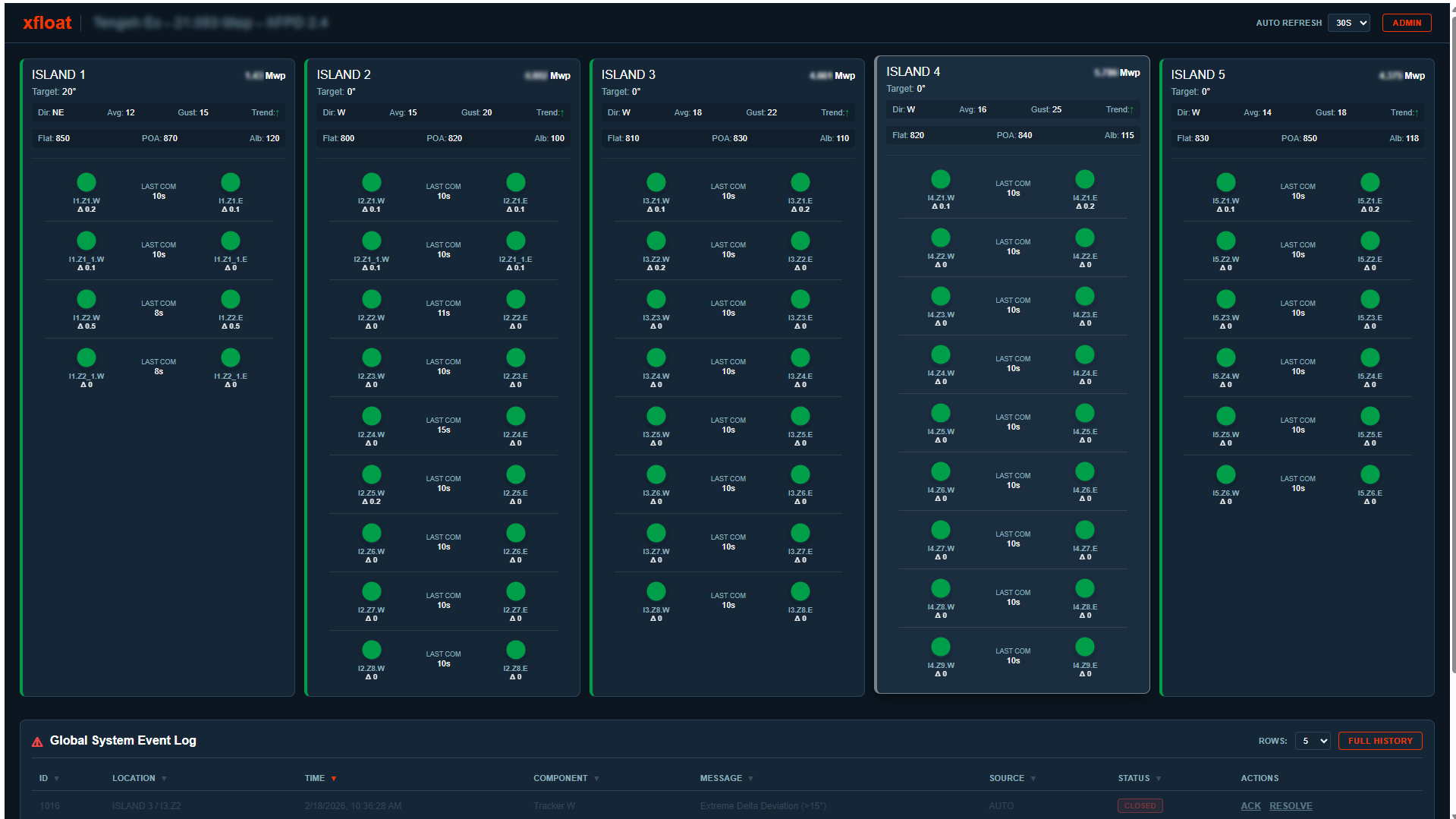
ROI-focused management snapshot – the main screen displays clear system performance indicators, filtered by economic and operational significance.
Synergy Between AI and Human Expertise
The XFPD 2.0 algorithm is not a generic off-the-shelf product. It has been carefully trained and calibrated by Xfloat’s expert engineering and operations team, which brings substantial and unique field experience in marine environments. The know-how accumulated over thousands of Floating PV operating hours has been embedded into the system’s code, enabling it to detect patterns that standard software would miss. This combination allows the platform to function like an experienced “virtual site manager,” capable of distinguishing between a communication glitch or faulty sensor and an anomaly requiring immediate attention.
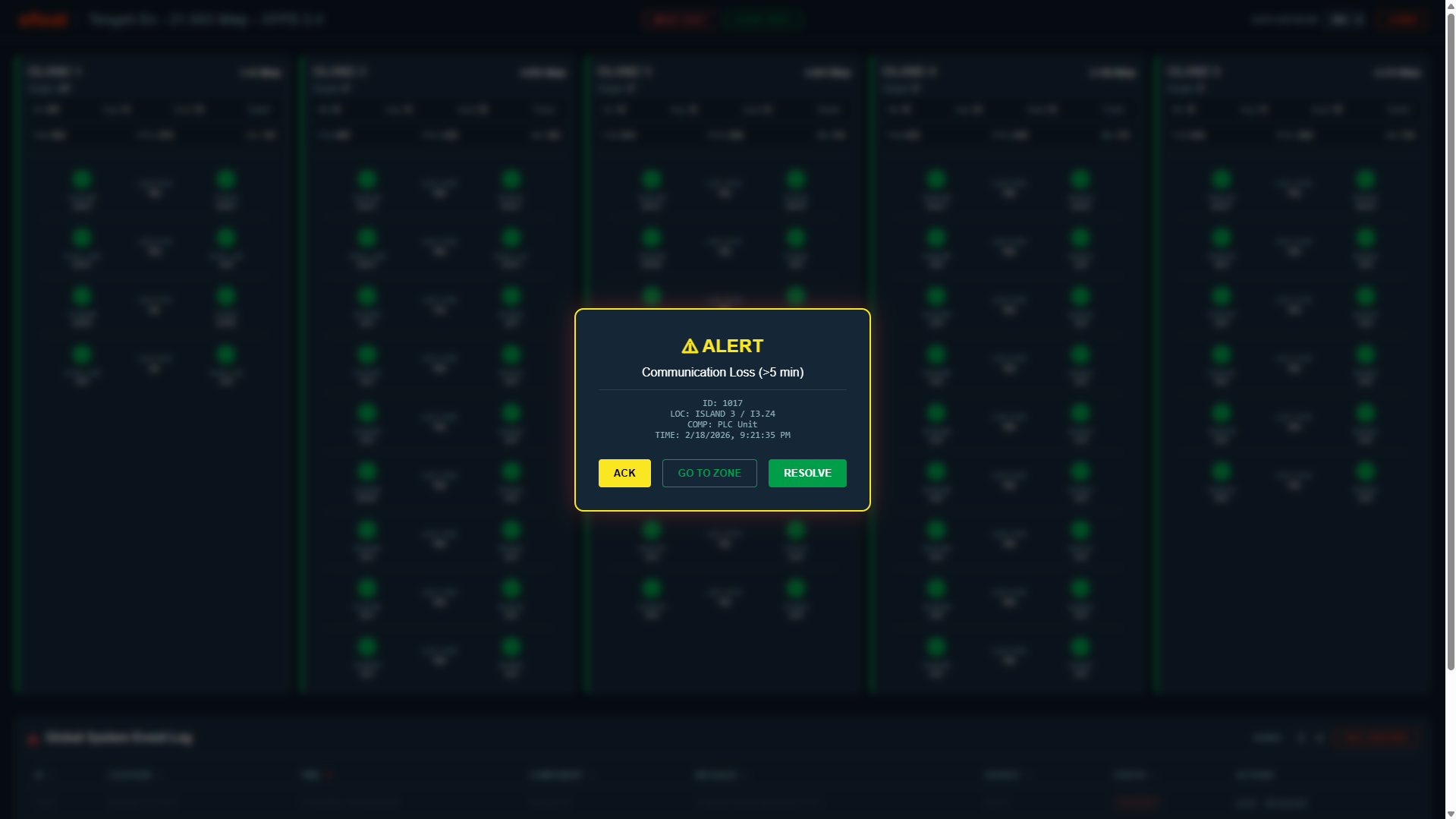
A call-to-action alert – the real-time popup not only reports an issue, but also provides context and guides the operator on how to prevent production losses.
Turning Data into Actionable Maintenance
XFPD 2.0 converts data overload into clear work instructions. The system identifies trends that could require major financial investment in the future if left untreated and directs maintenance teams toward targeted preventive actions. This approach extends system longevity and ensures maximum energy generation at minimal operating expenses (OPEX).
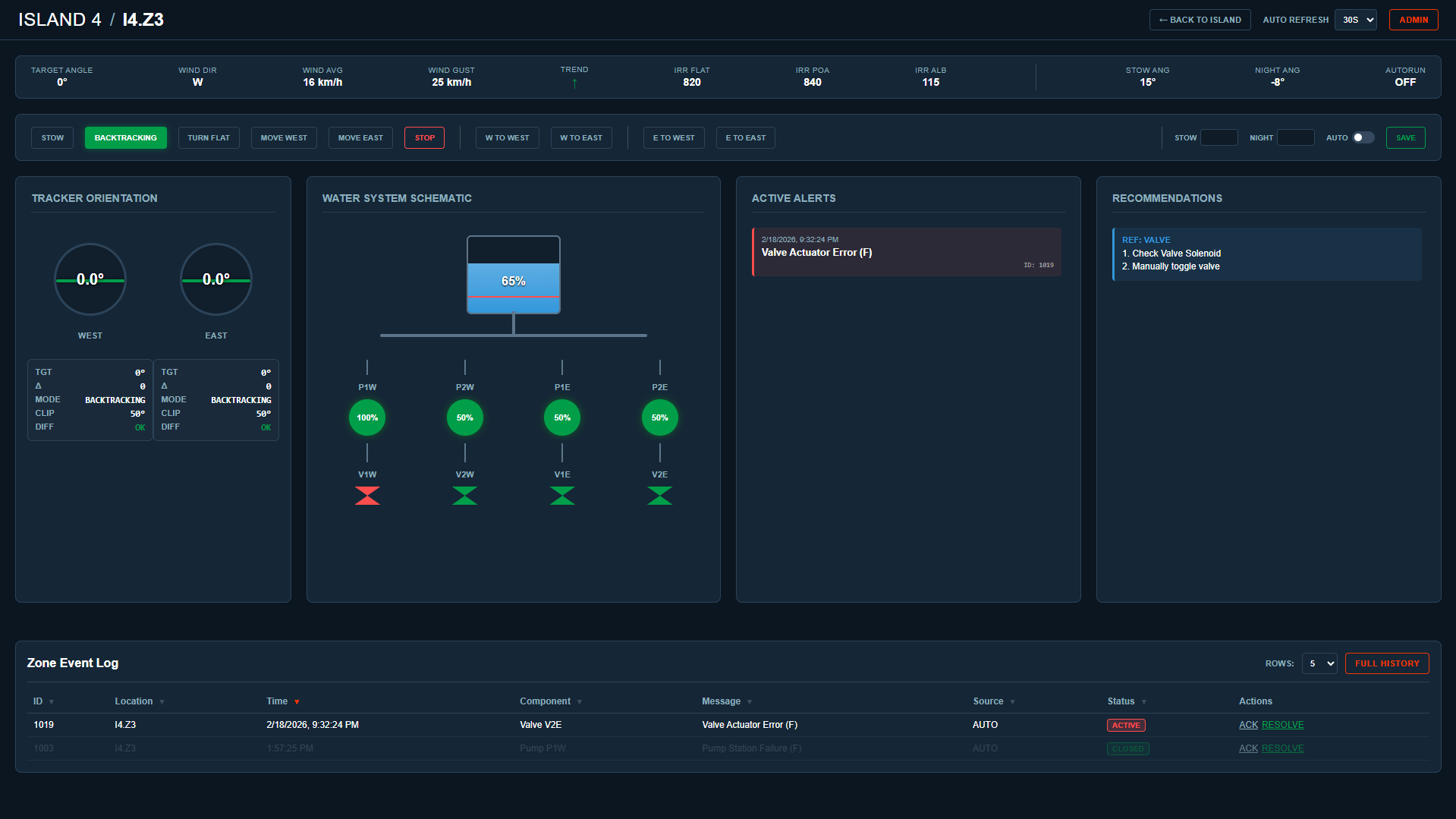
Closing the loop – the management system documents the full lifecycle of each incident, from detection to resolution, ensuring that no critical event falls through the cracks.
“In today’s environment, good software must deliver far more than attractive graphs,” said Xfloat’s development team. “We built XFPD 2.0 to provide investors and operators with peace of mind: the assurance that every alert carries economic significance, and that the system works 24/7 to maximize energy production while delivering an accurate, reliable, and truly operationally valuable picture of plant performance.”
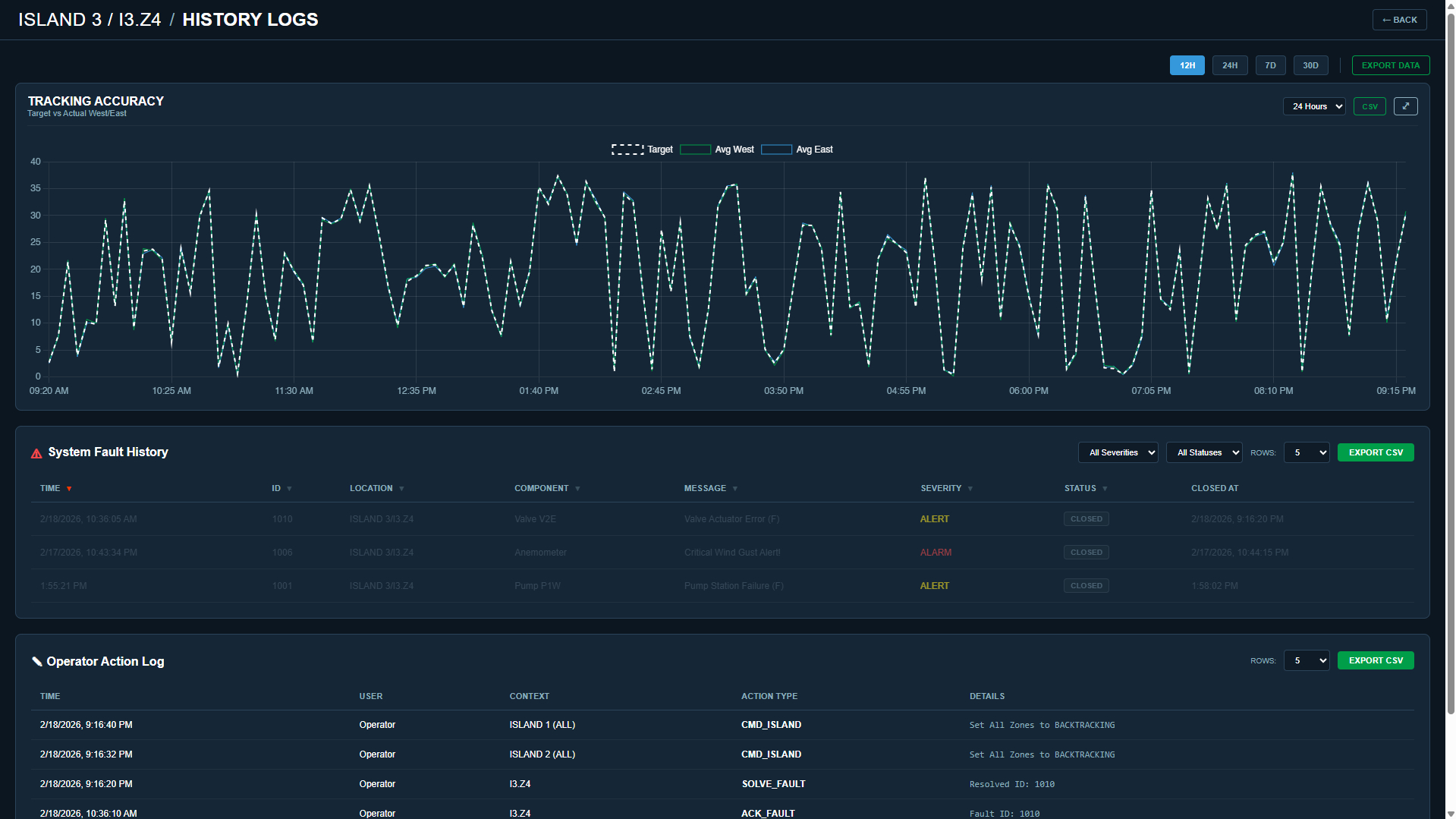
Historical performance and incident traceability at zone level: tracking accuracy trends, fault records, and documented operator actions provide full visibility into operational behavior and resolution quality.